From Aga Khan glamour to a quieter sardinia hotel design architecture
The coastline of Costa Smeralda was once defined almost entirely by the Aga Khan vision of star luxury carved into raw granite. Early projects by Jacques Couelle and his peers wrapped whitewashed star hotel forms around the Mediterranean scrub, creating a theatrical stage for international glamour in Sardinia, Italy. That language still frames many hotels in Porto Cervo and Cala di Volpe, but a new generation of architecture and interiors is now softening the script.
Patricia Urquiola steps into this landscape with the Rocco Forte Sardinia hotel in Porto Cervo, reimagining the former Hotel Le Palme as a contemporary luxury retreat that speaks more softly than its neighbours. Announced by Rocco Forte Hotels in 2023 and scheduled to open for the 2024 season, the project credits Urquiola as lead architect and interior designer, working closely with the group’s in-house technical team. Her approach to Sardinian hospitality design favours tactility over spectacle, using natural materials and local craft to let the Mediterranean views carry the drama. The project, developed with partners such as Rocco Forte Hotels and Eidos Hotel Capital Partners, aims to set a new benchmark for hospitality in this corner of Italy.
Where some newer resorts chase visual noise, Urquiola’s 64 rooms and suites are designed as calm frames for the sea and the coastal scrub outside. The architecture remains low slung and respectful, while the outdoor spaces are treated almost as additional rooms, with shaded terraces that blur boundaries between interior comfort and the natural landscape. In this context, Sardinia hotel design architecture becomes less about star counts and more about how well a hotel edits the coast for the solo explorer who wants both privacy and proximity to the water.
Mediterranean restraint in practice: inside Rocco Forte Hotel Porto Cervo
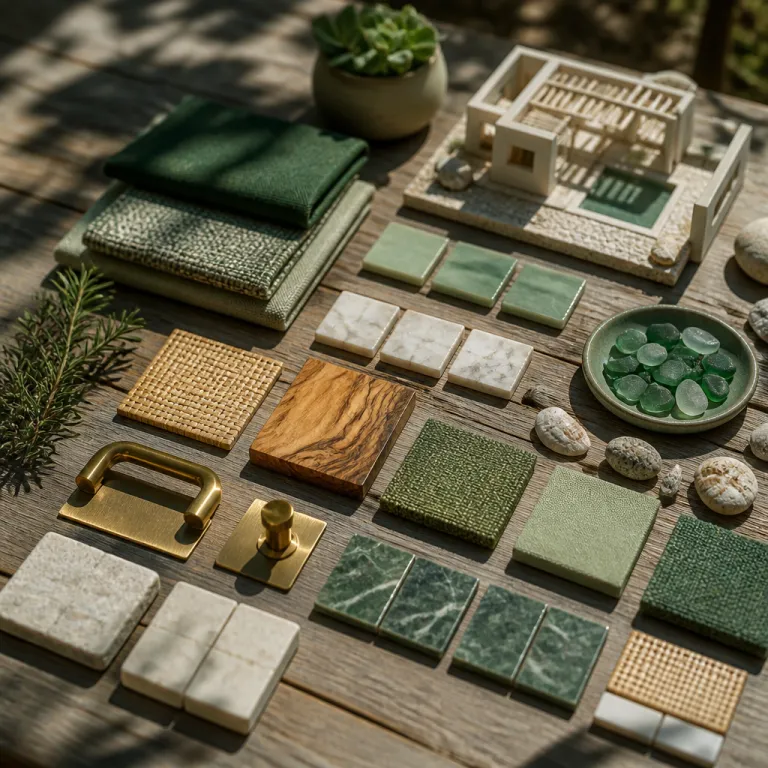
Step into the lobby of Rocco Forte Hotel Porto Cervo and the first impression is not of spectacle but of proportion. Urquiola’s take on Sardinia hotel design architecture is built around what she and the brand call Mediterranean restraint, a language of pale stone, woven textures and a palette drawn from the surrounding landscape. The 64 rooms and suites sit low along Liscia di Vacca, each one angled to catch Mediterranean views rather than compete with them.
Floors in cool stone echo the granite of Costa Smeralda, while textiles reference traditional Sardinian weaving without slipping into pastiche. Ceramics and carved wood pieces are produced by local artisans, grounding the hotel in Sardinian culture and aligning with ESG minded hospitality that values community as much as comfort. As one internal briefing puts it plainly, “a Spanish architect and designer known for innovative designs” is being asked to work with local makers rather than overwrite them, a reminder that Urquiola’s international profile is being channelled into very specific projects here.
Landscape architect Patrizia Pozzi shapes the outdoor spaces as a sequence of terraces stepping gently towards the sea, planted with Mediterranean scrub that feels closer to a coastal path than a manicured resort garden. Her role, confirmed in early project notes and press previews, focuses on preserving existing vegetation while stitching in new paths and viewpoints. For travellers planning where to stay before the high season, this quieter, design led resort pairs well with strategic trip planning guides such as what savvy travellers book before the July rush. In practice, the result is a star luxury property that feels almost residential, a Sardinia hotel where architecture, rooms and landscape collaborate rather than compete.
Three brands, one coast: how global names are redrawing Porto Cervo
Costa Smeralda is entering a rare moment when three heavyweight brands are reshaping the same stretch of Sardinia, Italy at once. Rocco Forte’s Porto Cervo project, Mandarin Oriental’s hillside resort above the Gulf of Pevero and the future Cheval Blanc at Pitrizza collectively signal a new chapter in Sardinia hotel design architecture. Each property interprets the same coastline, yet the resulting hotels feel strikingly different in mood and hospitality philosophy.
Mandarin Oriental Porto Cervo, set above Cala di Volpe and the wider cala coastline, leans into elevated seclusion with its 83 guest rooms and suites, five restaurants and a hillside position that surveys the landscape like a contemporary stone village. Cheval Blanc’s transformation of the historic Pitrizza, once a star hotel icon of the Aga Khan era, will test how far heritage architecture by designers in the lineage of Jacques Couelle can be adapted without losing soul. Together, these projects show how international brands now treat Costa Smeralda less as a playground and more as a serious design laboratory.
For the traveller, the choice between these hotels becomes a choice between design narratives as much as locations, whether you prefer the fjord like drama of Poltu Quatu or the softer coves near Cala di Volpe Porto Cervo. Pairing a stay in Porto Cervo with time in less polished corners of Sardinia, such as the tuna fishing traditions explored in the Carloforte mattanza feature, gives context to this luxury. It reminds you that behind every star luxury resort lies a working island where the Mediterranean is still a livelihood, not just a backdrop for rooms and infinity pools.
W Sardinia at Poltu Quatu: the loud counterpoint to Urquiola’s quiet
Where Urquiola’s Porto Cervo resort whispers, W Sardinia at Poltu Quatu speaks in a brighter, more extroverted tone. Carved into a natural fjord on the Costa Smeralda, the property uses whitewashed architecture stacked against granite cliffs to create a theatrical arrival sequence. Studio Meyer Davis handles the interiors, translating the brand’s global energy into a Sardinia hotel that feels deliberately social, with 157 guest rooms clustered around pools, decks and bars.
The design here leans into colour and contrast, using bold textiles and lighting to animate public areas that spill into outdoor spaces overlooking the marina. For some travellers, this is exactly the point; Sardinia Poltu Quatu becomes a stage where hospitality is about being seen as much as sleeping well. Our in depth look at the opening, Porto Cervo’s boldest new address, unpacks how Studio Meyer Davis balances international flair with nods to Sardinian craft, a role confirmed in the brand’s own design statements.
Compared with the Rocco Forte resort, W Sardinia’s architecture is less about blending into the Mediterranean scrub and more about framing the fjord as a kind of natural amphitheatre. Both hotels share the same coastline and the same Mediterranean views, yet they offer radically different readings of Sardinia hotel design architecture for the solo explorer. One invites you to skip content heavy itineraries and linger on a shaded terrace, while the other encourages you to move between pool, bar and marina in a continuous loop of social energy.
Hidden design gems beyond Porto Cervo: where architecture meets wild Sardinia
Step away from Porto Cervo and the Costa Smeralda spine, and the most interesting Sardinia hotel design architecture often appears in quieter coves and islands. Around the Maddalena Archipelago, small resorts and family run hotels experiment with low impact architecture that sits lightly on the landscape, using stone, limewash and timber to echo traditional Sardinian farmsteads. Here, guest rooms are often scattered as small volumes, allowing the Mediterranean scrub to weave between paths, terraces and outdoor spaces.
In these places, you feel the legacy of early projects by architects inspired by Jacques Couelle, but without the weight of star luxury branding. A simple star hotel on a lesser known cala might offer only a handful of rooms and suites, yet the way it frames Mediterranean views can rival the grandest resort in Sardinia, Italy. For solo travellers, these properties often provide a more direct connection to local life, whether through ceramics fired in nearby studios or textiles woven by artisans whose work also appears in high profile hotels back on the Costa Smeralda.
Names like Andrea and Marco might belong to the owners rather than to global design studios, yet their small projects contribute quietly to the evolving architecture story of the island. A modest Sardinia hotel near Cala di Volpe or Volpe Porto Cervo can still embody the same principles of natural materials, careful siting and respect for the coastline that guide Patricia Urquiola’s work. In the end, the most rewarding hospitality in Sardinia may be found where design, landscape and community align so well that you almost forget to check how many stars sit beside the hotel’s name.
FAQ
How is Patricia Urquiola changing hotel design in Costa Smeralda ?
Patricia Urquiola is shifting Costa Smeralda away from overt glamour towards a more restrained, material driven aesthetic that foregrounds natural stone, local textiles and calm spatial layouts. At Rocco Forte Hotel Porto Cervo, her interiors prioritise tactility and proportion, allowing the landscape and Mediterranean views to lead the experience. In interviews about her Sardinian projects she often notes that “the real luxury is silence and light,” a stance echoed in recent press conversations and already influencing how other luxury hotel projects on the coast balance spectacle with subtlety.
What does Mediterranean restraint mean in a sardinia hotel ?
Mediterranean restraint in a Sardinia hotel refers to a design language that uses a limited palette of natural materials, soft colours and simple forms to create calm spaces. Rather than competing with the coastline, the architecture and interiors frame the sea, the Mediterranean scrub and the light as the main attractions. Guests experience luxury through comfort, craftsmanship and views rather than through excessive decoration.
How do new resorts relate to the original Aga Khan era architecture ?
The original Aga Khan era architecture on Costa Smeralda, often associated with designers like Jacques Couelle, established a sculptural, whitewashed style that still defines the region. New resorts such as Rocco Forte Hotel Porto Cervo, W Sardinia at Poltu Quatu and future Mandarin Oriental and Cheval Blanc properties reinterpret that heritage with contemporary materials, sustainability goals and updated guest expectations. The tension lies in respecting the low rise, landscape hugging forms while introducing modern comforts and global brand identities.
Where can solo travellers find design focused yet quieter stays in Sardinia ?
Solo travellers seeking design focused but quieter stays can look beyond central Porto Cervo to smaller hotels around the Maddalena Archipelago, lesser known cala coves and inland villages. Many of these properties use thoughtful architecture, local stone and Sardinian craft to create characterful guest rooms without the intensity of major resorts. They often provide easier access to hiking, local food and everyday island life while still offering well considered rooms and outdoor spaces.
Why does local craft matter in luxury hotel design in sardinia italy ?
Local craft matters because it roots a luxury hotel in its specific place rather than in a generic international style. When Sardinian textiles, ceramics and stone work appear in guest rooms and public areas, they support local economies and give travellers a tangible connection to the island’s culture. Designers like Patricia Urquiola use these elements to add depth and authenticity to Sardinia hotel design architecture, ensuring that the experience feels uniquely tied to Sardinia rather than to any other Mediterranean destination.