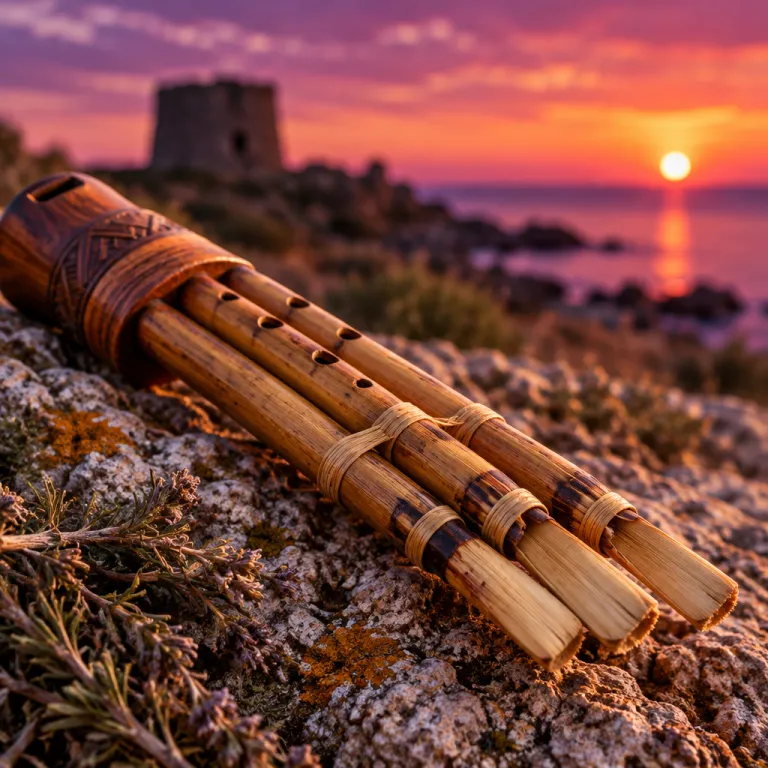
The launeddas and why this ancient sound matters for luxury travelers
The first time you hear Sardinian traditional music on the launeddas beside the sea, the sound feels older than the cliffs. This triple-pipe folk instrument carries three voices at once, weaving a single continuous song line that seems to fold time around a church square or hotel terrace. For families choosing a luxury stay, understanding why launeddas in Sardinia still shapes festivals and processions turns a beautiful resort into a gateway to something deeper in Sardinian folk life.
The launeddas is a set of three pipes cut from cane, each pipe tuned to a different pitch and length to create a dense, reedy harmony. One pipe carries the main melody, while the other two pipes hold a drone and countermelody, so the instrument’s three parts feel like a small ensemble played by a single musician. Because the instrument is powered by circular breathing, the musical sound never breaks, and this breathing technique lets the player sustain a traditional song for what feels like an impossibly long time.
For luxury travelers, this is not background folk music laid on for tourists; it is a living ritual language. The launeddas is still played at weddings, village festas and church processions, where Sardinian folk culture meets sacred ceremony in a single continuous line of traditional music. Choosing a property with a dedicated Sardinian cultural concierge means your family can attend these events as respectful guests, not spectators, and hear the instrument played where it truly belongs.
How the launeddas works: three pipes, single reed and endless breath
At first glance, the launeddas looks deceptively simple, just three reed pipes bound together with waxed thread. Look closer and you see that each pipe is a carefully tuned musical instrument, with a single reed cut from the same cane and adjusted by hand until the musical instruments respond like one living body. When you watch someone playing launeddas up close, the coordination between fingers, lips and lungs feels almost athletic.
Two of the pipes are usually held together in the left hand to provide a steady drone, while the third pipe in the right hand carries the agile Sardinian traditional melody. Because each pipe has its own single reed, the musician can shade the sound by tiny changes in pressure, creating a special timbre that no fiddle or guitar can quite imitate. The result is a dense, vibrating sound that fills stone churches and small village squares with a surprisingly powerful musical presence.
The real magic lies in the circular breathing that keeps the music flowing without a break, even during long religious processions or late-night dances. Air is stored in the cheeks, then pushed out with facial muscles while the player inhales quickly through the nose, a breathing technique that takes years to master and is still taught by dedicated Sardinian masters. For families staying in premium hotels near Cagliari, Oristano or the south coast, arranging a private workshop on circular breathing and reed preparation through local cultural centers can be as memorable as any yacht charter.
From Nuragic civilization to modern masters: the launeddas across millennia
Long before Rome, the Nuragic civilization left traces of musical life in small metal figurines, the famous bronzetti. Among them, scholars point to an ithyphallic bronze figure holding what appears to be three pipes, a visual echo of the launeddas that suggests an ancient continuity in Sardinian folk culture, even if the exact link remains debated. When you hear the instrument played today, you are listening to a musical thread that may stretch back to those stone towers and sacred wells.
This sense of antiquity gives Sardinian traditional music on launeddas a weight that no hotel playlist can match, especially when you encounter it in a church where the walls still bear medieval frescoes. The instrument’s reed pipes, cut from river cane and bound without metal keys, feel almost unchanged from those ancient models, even as modern players experiment with new musical forms. For many dedicated Sardinian musicians, preserving this ancient sound is less about nostalgia and more about keeping a living language fluent.
Names like Luigi Lai, often described as a modern master of the launeddas, have become synonymous with excellence, as he has spent a lifetime teaching younger players and refining the instrument’s three-pipe configurations. In villages across the island, from the Campidano plain to the rugged interior, small groups of players are quietly rebuilding the tradition of playing launeddas at local festas and religious events. When you plan a stay through a specialist platform such as stay-in-sardinia.com, you can ask concierges to connect you with these communities rather than settling for generic hotel entertainment.
Beyond launeddas: tenores, guitars and the wider Sardinian soundscape
Launeddas in Sardinia is only one voice in a broader Sardinian traditional sound world that rewards curious listeners. In the mountain village of Bitti, the Tenores di Bitti keep alive a polyphonic singing style where four male voices interlock like musical instruments, creating overtones that seem to vibrate in the stone itself. This is not polished stage folk; it is a communal practice that still accompanies work, celebration and sacred time.
Alongside these vocal traditions, the island’s guitar culture offers another layer for travelers who care about music as much as sea views. In Gallura, guitar styles lean toward bright, rhythmic strumming suited to open-air festas, while in Barbagia the playing can be darker and more percussive, echoing the rugged landscape more than any polished fiddle tune. Many luxury properties now invite local guitarists to perform at sunset, turning a simple terrace drink into an informal masterclass in regional musical styles.
Jazz festivals such as Time in Jazz in Berchidda have created a bridge between traditional music and contemporary improvisation, where launeddas, other reed instruments and even occasional metal percussion share the stage with international artists. For families, this mix of old and new makes Sardinian folk culture feel accessible to teenagers as well as grandparents. Choosing a hotel that curates its musical programming with the same care as its wine list ensures that every evening offers a special soundscape rather than a generic playlist.
Where to hear launeddas from your hotel: festivals, churches and quiet courtyards
To experience Sardinian traditional music on launeddas in context, timing and location matter as much as the instrument itself. Autumn brings the Autunno in Barbagia festival series, when villages in the interior open their courtyards, churches and streets to visitors, and launeddas is often played beside roasting chestnuts and local wine. Booking a family-friendly luxury base in Nuoro or Oliena during this time lets you dip into these events by day and return to calm pools and spacious suites by night.
On the coast, many church processions still feature launeddas leading the way, the continuous sound of the reed pipes setting the pace for slow, measured steps. In smaller towns, you may hear the instrument’s three-pipe harmonies drifting from a side chapel during a wedding or a saint’s day mass, especially in places where a dedicated Sardinian musician serves the parish. Ask your concierge to check local parish schedules; a ten-minute walk from a five-star lobby can lead to an unforgettable musical moment.
Cultural centers in Cagliari, Oristano and smaller inland towns sometimes host workshops on playing launeddas, where visitors can handle the instrument, feel the single reed vibrate and attempt basic circular breathing under expert guidance. For families, these sessions turn abstract heritage into a tactile experience, especially for children who may already play another instrument such as a fiddle or guitar. When choosing accommodation, look for properties that highlight partnerships with such centers and clearly describe how they support Sardinian folk music, rather than only listing spa treatments and pool sizes.
Design, silence and sound: choosing hotels that frame Sardinia’s musical heritage
The right hotel does not compete with Sardinian traditional music on launeddas; it frames it. Properties built in stone and wood, with shaded courtyards and small chapels, allow the reedy musical sound of launeddas or the raw harmonies of Tenores to resonate naturally. Articles such as this guide to Sardinian hotel architecture show how concrete, stone and sea light can create spaces where sound travels softly rather than bouncing off glass.
When you read a hotel description, look for signs that the property engages with Sardinian folk culture beyond a single themed night. Mentions of collaborations with local makers of reed pipes, launeddas workshops, or concerts featuring Luigi Lai or younger players suggest a deeper commitment than a one-off folk show. Some dedicated Sardinian hoteliers even commission custom stands or display cases for instruments, integrating them into the property’s design as quiet references to the island’s ancient musical life.
Silence matters too, because it lets each song breathe between notes, especially after the dense textures of launeddas in Sardinia or a powerful Tenores performance. A well-designed resort will offer both lively spaces where music is played and calm corners where families can process what they have heard, perhaps overlooking a Nuragic site that once belonged to the same Nuragic civilization that produced those ithyphallic bronze figurines. Choosing such a place turns your stay into a special kind of listening retreat, where every reed, every breath and every pipe connects luxury comfort with an ancient, still vibrant island culture.
FAQ
What exactly is the launeddas and how is it played?
The launeddas is a traditional Sardinian wind instrument made of three cane pipes, each with its own single reed, bound together and played simultaneously. One pipe carries the melody while the other two provide drones and harmonies, creating a dense, continuous sound. Players use circular breathing, a breathing technique that stores air in the cheeks, to keep the music flowing without pauses during long ceremonies and dances.
Where can I hear launeddas during a luxury stay in Sardinia?
You are most likely to hear launeddas at village festivals, church processions and cultural events such as Autunno in Barbagia or concerts in Cagliari and Oristano. Many high-end hotels can arrange private performances or workshops with dedicated Sardinian musicians, especially in the south and central regions. Ask your concierge to check local parish calendars and cultural center programs rather than relying only on in-house entertainment.
Is Sardinian traditional music suitable for children and families?
Yes, Sardinian traditional music is very family-friendly, because most performances happen in open-air squares, village streets and relaxed cultural centers. Children are often fascinated by the unusual reed pipes of the launeddas and the powerful voices of Tenores choirs. Booking a family-oriented luxury hotel near these events lets you enjoy the music by day and return to quiet, comfortable rooms at night.
How does Sardinian music connect to the island’s ancient history?
Archaeological finds from the Nuragic civilization include metal bronzetti figurines that appear to show triple pipes similar to the launeddas, suggesting a very long continuity of musical practice, though exact details remain the subject of research. Many songs and styles used in religious and folk contexts today echo themes and structures that predate Roman influence. Hearing these traditions in person offers a direct, sensory link between modern Sardinia and its ancient past.
Can I learn to play launeddas during my vacation?
While mastering launeddas takes years, some cultural centers and private teachers offer introductory sessions where visitors can try basic fingerings and experience circular breathing. Luxury hotels with strong local partnerships can arrange short workshops with experienced players, sometimes including makers who craft the reed pipes by hand. These encounters provide a meaningful, hands-on way to engage with Sardinian culture beyond standard sightseeing.