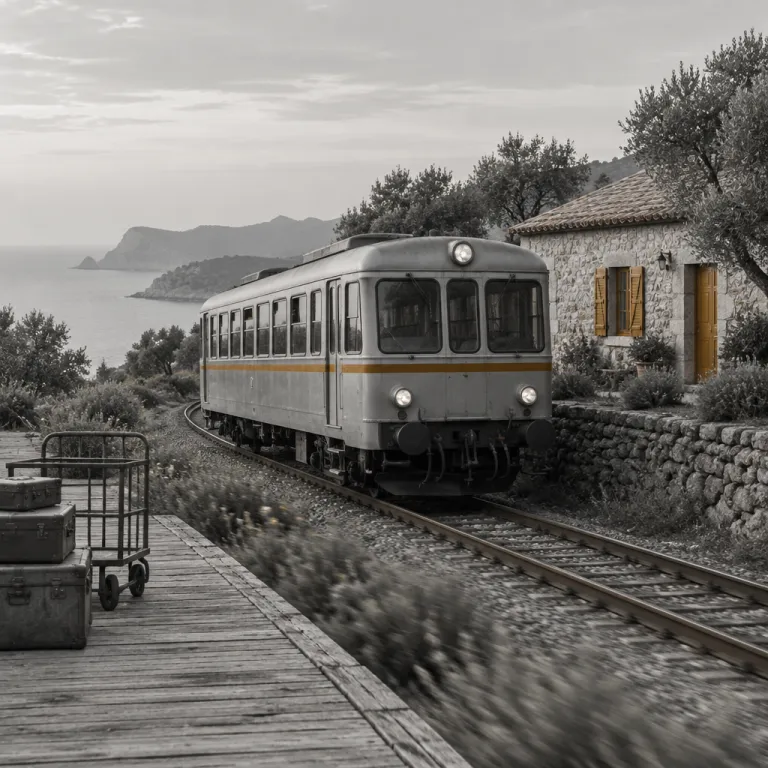
The sardinia trenino verde train as a different kind of luxury
The Sardinia Trenino Verde train is not about speed or status. It is a historic narrow gauge green train that drifts across the interior of Sardinia at walking pace, turning the island into a moving landscape rather than a backdrop. For travelers used to private transfers and helipads, this railway offers a rare, quietly extravagant journey that feels like a private viewing of beautiful landscapes.
Running on heritage lines now managed by ARST (successor to Ferrovie della Sardegna, often still called FdS), the Trenino Verde connects forgotten stations, stone hamlets and valleys where the coastal crowds never arrive. These trains were once the working backbone of the island, carrying ore, timber and people long before beach resorts existed, and today the same routes feel like an open-air salon on rails. When you plan a train Sardinia itinerary around them, you are choosing time and space instead of spectacle and scene.
Luxury travelers can fold the Sardinia route of the Trenino Verde into a high-end stay without sacrificing comfort. Think of the green train as a day-long excursion between two refined bases, rather than a full transport replacement, and you unlock a different rhythm for your journey. The reward is a sense of Sardinia that coastal roads and airports simply cannot match, a unique experience that lingers long after you return to the sea Sardinia shoreline.
Main trenino verde routes: from mountains to forgotten coasts
The most dramatic Sardinia Trenino Verde train route runs from Mandas to Arbatax, threading into the Gennargentu mountains on a narrow gauge line that feels improbably engineered. Leaving the Cagliari Mandas plains, the train climbs through cork forests and granite gorges before descending toward the Arbatax coastline, where red cliffs plunge into the sea Sardinia is famous for. This Mandas–Arbatax journey usually takes around five to six hours, but the changing light and empty valleys make the hours feel like a curated film.
On the western side, the Macomer–Tresnuraghes and Macomer to Bosa line glides down to the coast, then follows the Temo river toward the pastel town of Bosa. Here the railway brushes vineyards and olive groves before reaching Bosa Marina, where the beach curves below a medieval castle and the trains seem to pause between land and water. For travelers staying in refined coastal properties or all-inclusive Sardinia resorts, this Bosa route is an elegant half-day trip that pairs rail nostalgia with aperitivo on the promenade.
Further north, the Tempio Pausania to Palau section once formed part of the celebrated Tempio Palau and Gallura network, linking granite highlands with the port town that faces the La Maddalena archipelago. While regular ARST and former Ferrovie della Sardegna services have shifted over time, special Trenino Verde departures still run on selected lines, typically from late spring to early autumn, offering a way to cross Gallura without touching the main highways. Each of these routes reveals a different Sardinia route profile, from mountain spine to river valley to island-facing coast.
What it feels like on board: slow rail as a unique experience
Stepping onto the Sardinia Trenino Verde train, you leave behind timetables that feel like obligations. The carriages are simple, with large windows that frame cork oaks, shepherds’ huts and distant nuraghi as the green train moves at a pace that lets you notice every stone wall. This is slow travel in its purest form, where the journey is not a bridge between hotels but a highlight in itself.
On the Mandas–Laconi and Mandas–Arbatax stretches, the railway curves through high plateaus where you might see a single shepherd in an hour, and the silence between stations feels almost curated. Tiny halts appear with a single house, a bar and a faded sign, and the trains pause long enough for you to step down, breathe the resin of pine forests and feel how far you are from the sea Sardinia postcards usually show. Planning your visit for the best time to visit Sardinia for a luxurious coastal escape allows you to combine these inland days with warm evenings back on the shore.
Along the Macomer–Tresnuraghes and Bosa line, the journey becomes more coastal, with glimpses of Bosa Marina and the river mouth opening toward the horizon. Here the food wine culture of the region comes into focus, as you roll past vineyards that supply the Malvasia di Bosa poured later in your hotel bar. As one Milanese couple remarked after their first ride, “We thought it would be just a transfer, but the train made us taste Gallura and Bosa before we even sat down to dinner.” The rhythm of the train Sardinia experience encourages you to think about where your plate and glass actually begin.
History of the railway lines and how to ride them well
The Trenino Verde story begins when Ferrovie della Sardegna built extensive narrow gauge lines across the island to serve mining and agriculture. These railway corridors, laid between inland towns and ports, allowed ore, timber and food to reach markets long before modern roads, and they stitched together communities that had previously relied on mule tracks. When trucks and highways arrived, many lines lost their commercial role and were reborn as heritage routes under the Trenino Verde banner.
Today, selected trains run seasonally on sections such as Mandas–Arbatax, Isili–Sorgono, Macomer–Bosa and Tempio Pausania–Palau, with timetables that concentrate on late spring through autumn and frequencies that can be as low as one or two departures per week on some lines. Services are limited, so you need to check current ARST and Ferrovie della Sardegna information, reserve seats in advance and treat the journey as a full-day commitment rather than a quick transfer. Starting in Mandas, Macomer, Tempio Pausania or Bosa gives you access to different landscapes, from high Gallura plateaus to river valleys and the Arbatax Gairo corridor of ravines.
For luxury travelers, the smartest strategy is to anchor your itinerary around two or three high-quality properties and use the Sardinia Trenino Verde train as a linking thread. A simple sample itinerary might be: night one in Cagliari, morning transfer to Cagliari Mandas station, Trenino Verde to Arbatax for two nights by the sea, then a private car north to Olbia or Palau. This way the railway becomes a curated chapter in your Sardinia journey, not a logistical gamble.
Pairing the trenino verde with luxury stays and hidden coastal gems
Using the Sardinia Trenino Verde train as a spine, you can design a trip that moves from mountain silence to polished seaside suites. One elegant pattern is to begin near Cagliari, transfer to Mandas for the green train to Arbatax, then check into a refined coastal property where the sea Sardinia light floods floor-to-ceiling windows. From there, a private transfer can take you north along the eastern coast or back inland to rejoin another of the Trenino Verde routes.
On the western side, a stay near Macomer or in the hill town above Bosa lets you ride the Macomer–Tresnuraghes line down to Bosa Marina, then continue by car to a curated selection of elegant beachfront Italy escapes for refined seaside stays. In Gallura, basing yourself between Tempio Pausania and Palau opens up the Tempio–Palau heritage section when operating, while still giving access to La Maddalena and the sculpted granite coves that define this corner of Sardinia. Throughout, the contrast between the quiet railway and the polished service of premium hotels heightens your sense of place.
Food and wine are central to this style of travel, and the Trenino Verde routes pass through regions where food wine traditions remain deeply local. You might step off near Mandas–Laconi for a lunch of slow-cooked lamb and Cannonau, then return to a hotel where the sommelier can trace each bottle back to vineyards you saw from the train. The result is a journey where lines on the map become flavors on the plate.
Practical tips, digital quirks and why this railway still matters
Planning a Sardinia Trenino Verde train day requires more attention than booking a standard rail ticket. Timetables for these narrow gauge lines change with the season, and some sections operate only on specific days, so you need to verify details with ARST, Ferrovie della Sardegna channels or local tourist offices before committing hotel dates. Build in margin on either side of the journey, and avoid tight dinner reservations on travel days.
Most departures begin from modest stations in Mandas, Macomer, Bosa, Tempio Pausania or Arbatax, where facilities are basic and the atmosphere feels closer to a rural bus stop than a grand terminal. Treat this as part of the charm, and resist the urge to multitask the experience with constant phone use or attempts to skip menu screens on travel apps while the landscape slides by. The real luxury here is attention, whether you are watching the Arbatax Gairo ravines or the vineyards near Bosa Marina.
For travelers used to the polished choreography of five-star resorts, the Trenino Verde is the antithesis of coastal glamour, yet it deepens every subsequent hotel stay. After a day on the train, Sardinia’s interiors feel less abstract, and the sea Sardinia views from your suite carry the memory of cork forests, stone farmhouses and quiet towns. In a region where many visitors never leave the shoreline, choosing this railway is a statement about how you want to travel.
FAQ
How long does the Mandas to Arbatax trenino verde journey take ?
The Mandas to Arbatax section of the Sardinia Trenino Verde train typically takes most of a day, with journey times often around five to six hours depending on stops and operating patterns. This narrow gauge route is designed for slow travel rather than efficiency, so you should treat it as a full-day excursion. Plan your hotel check-in and dinner reservations with generous margins.
Which trenino verde route is best for first time visitors ?
For a first visit, the Macomer to Bosa and Bosa Marina line offers an excellent balance of scenery and logistics. The journey combines inland views with a coastal finale, and it is easy to pair with luxury stays along the western sea Sardinia shoreline. Travelers with more time and patience can then add the Mandas–Arbatax route for a deeper inland experience.
Can I combine the trenino verde with a high end beach holiday ?
Yes, the Sardinia Trenino Verde train works well as a contrasting inland chapter within a coastal itinerary. Many travelers book premium hotels near Cagliari, Arbatax, Bosa or Palau, then use private transfers or rental cars to reach the relevant stations. This approach lets you enjoy both refined seaside stays and the unique experience of the green train.
Do I need to book trenino verde tickets in advance ?
Advance booking is strongly recommended, especially on popular routes such as Mandas–Arbatax or Macomer–Bosa during peak months. Seats on these heritage trains are limited, and services do not run every day, so last-minute plans can be risky. Check current ARST and Ferrovie della Sardegna information and secure tickets before finalizing hotel dates.
Is the trenino verde suitable for solo luxury travelers ?
Solo travelers who value quiet, landscape and authenticity often find the Trenino Verde ideal. The carriages feel safe and relaxed, and the slow pace encourages conversation with fellow passengers or simply time alone with the view. Pairing the railway with carefully chosen luxury hotels creates a balanced journey that feels both independent and indulgent.