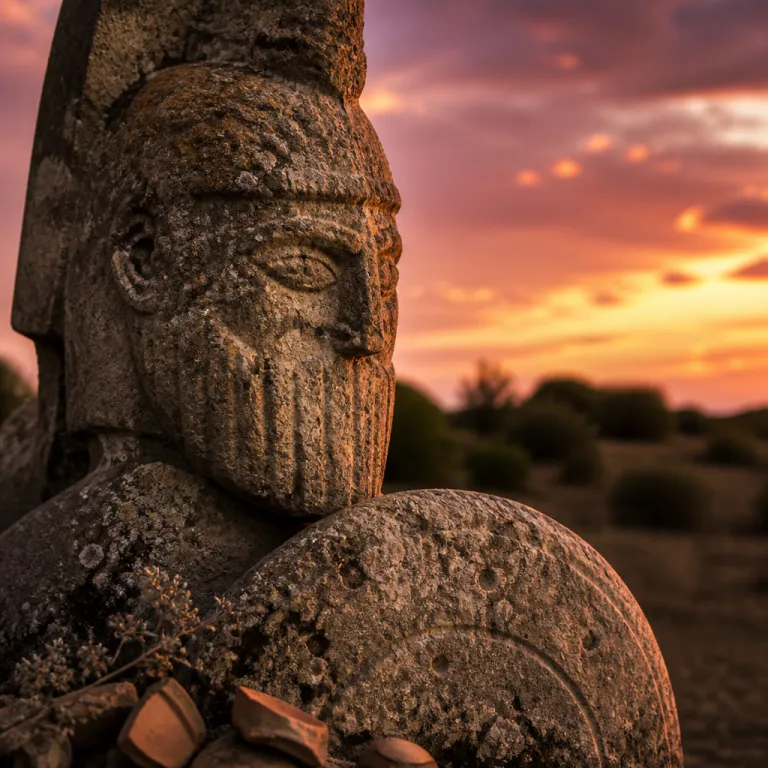
Why the giants of Mont'e Prama belong on a luxury Sardinia itinerary
The giants Mont'e Prama Sardinia museum story begins far from Costa Smeralda’s marinas. In the quiet agricultural area around Cabras, an ancient necropolis revealed stone giants that reshaped how scholars read the Mediterranean map, and they now anchor one of Sardinia’s most compelling cultural experiences. For luxury travelers used to polished resorts, this archaeological site offers something rarer than a private cove ; it offers a direct encounter with a Nuragic civilization that left sacred stones, nuraghe towers, and monumental sculptures instead of palaces.
When you stand before the reconstructed statues at the Giovanni Marongiu civic museum in Cabras, the scale is startling. Twenty eight statues mont figures, carved from local sandstone and rising between 2 and 2.5 metres, represent boxers, archers, and warriors aligned like a stone army from the Bronze Age and early Iron Age. These giants, reassembled from more than 5 000 fragments, are the only known stone sculptures from the Nuragic civilization, and they transform the usual narrative that Sardinia was peripheral to classical power.
For a traveler choosing where to stay, the giants mont narrative changes how you read the island’s map. A night in a refined coastal retreat near Oristano suddenly becomes a gateway to an archaeological museum experience that rivals far more famous sites. The giants Mont'e Prama Sardinia museum circuit, split between the Giovanni Marongiu civic museum in Cabras and the national archaeological museum in Cagliari, lets you trace the journey from necropolis to gallery, from buried tombs to curated sacred stones.
Reading Nuragic society through boxers, archers, and warriors
The statues from Monte Prama are not anonymous idols ; they are a stone census of Nuragic people and power. Archaeologists classify them into three main types, and each group of sculptures opens a different window onto Nuragic society, ritual, and warfare. As you move through the giants Mont'e Prama Sardinia museum displays, the sequence of boxers, archers, and warriors feels almost like a storyboard carved in sandstone.
The boxers, with their raised arms and shield held above the head, suggest ritualised combat rather than casual violence. Their human head proportions are stylised, with circular eyes drilled deep into the stone, and they probably stood as guardians over tombs in the necropolis that once lined the Mont'e Prama site. The archers and warriors, equipped with nuragic bronze style weapons and detailed armour, hint at a Nuragic civilization that mastered both ritual and real warfare during the Bronze Age and into the Iron Age.
Each statue, whether boxer or warrior, stands like a three dimensional nuraghe model of social hierarchy. The giants mont figures echo the island’s nuraghe towers, those truncated conical structures that still punctuate the Sardinia landscape, and together they form a visual language of power, clan identity, and sacred stones. To deepen that cultural thread, many travelers pair Cabras with a stay in Alghero, using guides such as this insider look at Alghero’s Catalan heartbeat to balance coastal life with archaeological immersion.
The museum experience in Cabras and Cagliari
Visiting the Giovanni Marongiu civic museum in Cabras is the most intimate way to meet the giants. Here, the giants Mont'e Prama Sardinia museum route leads you from the first archaeological fragments to the fully reassembled statues, with clear explanations of excavation methods, restoration techniques, and the broader archaeological site. Panels detail how Italian Ministry of Cultural Heritage teams and the Sardinia Region supported the reassembly of shattered sculptures into coherent warriors, archers, and boxers.
The museum’s layout lets you appreciate both the artistry and the labour behind the statues mont reconstruction. In one room, you see human head fragments, shields, and weapons laid out like a three dimensional puzzle ; in another, the completed giants stand in a solemn row, their nuragic bronze inspired details carved into sandstone rather than metal. This contrast between fragments and whole figures underlines how fragile the archaeological record can be, and why this site has become central to national archaeological research on Nuragic Sardinia.
Part of the collection also travels between Cabras and the archaeological museum in Cagliari, often referred to as the national archaeological museum of Sardinia. When you visit the museum in Cagliari, you can compare the stone giants with bronze statuettes, nuraghe models, and other artefacts from across the island, seeing how the Nuragic people expressed the same themes in different materials. “What are the Giants of Mont'e Prama?” “Ancient stone statues from Nuragic Sardinia.” “Where were the Giants discovered?” “Near Mont'e Prama, Cabras, Sardinia.” “When were the Giants of Mont'e Prama found?” “In March 1974.” “What do the statues represent?” “Boxers, archers, and warriors.” “Where can the Giants be viewed?” “Archaeological Museum of Cagliari.”
From necropolis to sea: pairing Mont'e Prama with the Sinis peninsula
The giants Mont'e Prama Sardinia museum visit sits in a landscape that rewards slow, thoughtful travel. Just beyond Cabras, the Sinis peninsula stretches into the sea with a mix of wetlands, archaeological ruins, and quiet beaches that feel far removed from Sardinia’s glossier coasts. This area invites you to alternate between sacred stones and salt spray, between necropolis tombs and flamingo filled lagoons.
From the archaeological site near Mont'e Prama, it is a short drive to Tharros, the coastal archaeological site where Phoenician and Roman layers meet the waves. Here, columns and foundations overlook the same waters that once carried Nuragic bronze goods and bronze statuettes across trade routes, linking Sardinia to wider Mediterranean networks. The contrast between the ancient Nuragic necropolis inland and the later harbour city on the coast makes a compelling day, especially when framed by the light and wind of the Sinis peninsula.
Wildlife adds another layer to this cultural circuit. The wetlands near Cabras host pink flamingos, herons, and other birds that thrive in the brackish lagoons, and their presence softens the starkness of stone warriors and tombs. Many travelers choose a refined coastal base elsewhere on the island, such as a sea view retreat on Costa Smeralda highlighted in this review of a sophisticated Capo d'Orso hotel, then dedicate a full day to the Mont'e Prama and Sinis peninsula area.
Planning your visit: logistics, timing, and where to stay
Reaching the giants Mont'e Prama Sardinia museum circuit is straightforward if you plan around Cabras and Oristano. From Cagliari, the drive to the Cabras area takes around one and a half to two hours, and many travelers combine a morning at the archaeological museum in Cagliari with a later day devoted to the Giovanni Marongiu civic museum and the nearby archaeological site. Roads are good, distances are modest, and the shift from city to coastal wetlands feels like a reset.
Allow at least two hours for the museum in Cabras, especially if you want to study the statues mont details and the smaller artefacts such as nuraghe models and bronze statuettes. A separate visit to the open air archaeological site near Mont'e Prama, where the necropolis and tombs were excavated, adds another hour, though access conditions can vary and should be checked locally. Many visitors then continue to the Sinis peninsula for Tharros or a quiet beach, turning the day into a balanced mix of ancient culture and sea air.
For accommodation, look for properties that understand the appeal of Nuragic heritage as much as coastal views. High end hotels around Oristano and along the west coast increasingly curate experiences that link guests to Nuragic people history, arranging private guides to the necropolis, the giants mont statues, and nearby nuraghe sites. If your Sardinia journey also includes the north, pairing this with a stay in a refined Costa Smeralda property creates a satisfying contrast between archaeological immersion and contemporary coastal luxury.
Why the giants matter in Mediterranean archaeology and Sardinian identity
The giants Mont'e Prama Sardinia museum story is not just a local curiosity ; it is a pivot point in Mediterranean archaeology. Before the excavation of the necropolis and its statues, the Nuragic civilization was known mainly through nuraghe towers, bronze statuettes, and scattered sacred stones. The emergence of monumental stone warriors, archers, and boxers forced scholars to rethink the artistic and political ambitions of Nuragic people in the Bronze Age and Iron Age.
These sculptures show that Sardinia was not a cultural backwater but a sophisticated player in the ancient world. The scale of the statues mont figures, the complexity of their armour, and the alignment of tombs at the Mont'e Prama archaeological site all suggest an organised society with strong ritual and military elites. When you stand in front of a single human head carved with concentric eyes, you sense a visual language that is both deeply local and yet in dialogue with wider Mediterranean traditions.
For contemporary Sardinia, the giants have become a powerful symbol of identity. Exhibitions at the Giovanni Marongiu civic museum in Cabras and at the archaeological museum in Cagliari present the giants mont narrative as part of a continuous story that runs from ancient nuraghe settlements to modern coastal towns. For luxury travelers, engaging with this narrative adds depth to a Sardinia stay, turning a trip from a sequence of beaches into a layered journey through time, stone, and sea.
FAQ
What are the Giants of Mont'e Prama ?
The Giants of Mont'e Prama are monumental stone statues representing boxers, archers, and warriors created by the Nuragic civilization of Sardinia. They were carved from local sandstone, stand around 2 to 2.5 metres tall, and date to the transition between the Bronze Age and the Iron Age. These sculptures are the only known examples of large scale stone statuary from Nuragic Sardinia.
Where can I see the Giants of Mont'e Prama during my trip ?
The main display of the Giants is at the Giovanni Marongiu civic museum in Cabras, on Sardinia’s west coast near the Sinis peninsula. Some statues and related fragments are also exhibited at the archaeological museum in Cagliari, often referred to as the national archaeological museum of Sardinia. Checking current exhibition arrangements before traveling helps you plan whether to focus on Cabras, Cagliari, or both.
How long do I need to visit the museum and archaeological site ?
Plan at least two hours for the Giovanni Marongiu civic museum in Cabras to appreciate the statues, fragments, and contextual displays. If access to the Mont'e Prama archaeological site and necropolis is available, add another hour to walk the area and understand how the tombs were arranged. Many travelers then extend the outing into a full day by visiting Tharros or beaches on the Sinis peninsula.
Why are the Giants important for understanding Nuragic civilization ?
The Giants demonstrate that the Nuragic people could produce monumental stone sculptures on a scale comparable to other Mediterranean cultures. Their detailed armour, weapons, and stylised human head features reveal aspects of Nuragic religion, warfare, and social hierarchy that small bronze statuettes alone could not show. For archaeologists, the combination of statues, tombs, and the wider Mont'e Prama site provides a rare, integrated view of Nuragic ritual and power.
Can I combine a visit to Mont'e Prama with other attractions nearby ?
Yes, the Cabras area and Sinis peninsula make it easy to pair culture with nature. After the giants Mont'e Prama Sardinia museum visit, many travelers continue to the coastal archaeological site of Tharros, the wetlands with pink flamingos, or quiet beaches such as Is Arutas. This combination works well from a base in Oristano or from a wider Sardinia itinerary that includes both the west coast and more famous regions like Costa Smeralda.