From peasant hearth to Michelin plate: a new Sardinian language of flavor
On Sardinia, the most exciting tables are not copying mainland Italian trends. They are translating shepherd suppers and fishermen’s breakfasts into plates that sit comfortably among the finest Michelin restaurants Sardinia now offers. In this new wave, elevation never means erasing the smoke of the fire pit or the salt of the mistral.
Locals talk about a quiet revolution, as each Michelin-starred restaurant treats pane carasau, pecorino sardo and bottarga as building blocks rather than rustic curiosities. This is where the Michelin Guide meets the agriturismo courtyard, and where a single Michelin star can still smell faintly of sheep’s milk and myrtle. The result is a cluster of starred restaurants that feel rooted in the island’s granite and macchia, not in generic luxury.
When travelers search for Michelin restaurants Sardinia wide, they now find a map that stretches from Costa Smeralda to Cagliari. In the Michelin Guide Italy 2024, the entries for these addresses read like field notes on Mediterranean resilience, with seafood, wild herbs and grains treated as equal protagonists. For hotel guests, this means you can step from a suite into a dining room where a Michelin-starred chef plates culurgiones with the same respect a nonna once gave the family’s only meal of the day.
The Michelin Guide presence on the island has grown steadily, reflecting a broader Italy Michelin story where regional voices are finally amplified. Sardinia’s chefs are not chasing three stars for the sake of prestige; they are chasing a language that can carry porceddu and fregola into the future. In this context, Michelin stars become punctuation marks in a longer narrative about land, sea and memory, as recent guide inspectors’ notes often emphasize “identity” and “sense of place.”
For travelers booking luxury stays, this shift changes how you plan evenings as much as how you choose a room. A hotel with direct access to Michelin-recognized dining that Sardinia considers essential is no longer a nice extra; it is part of the core experience. You are not just reserving a bed, you are reserving a seat at the table where the island is rewriting its own cuisine.
Il Fuoco Sacro and the Costa Smeralda vanguard
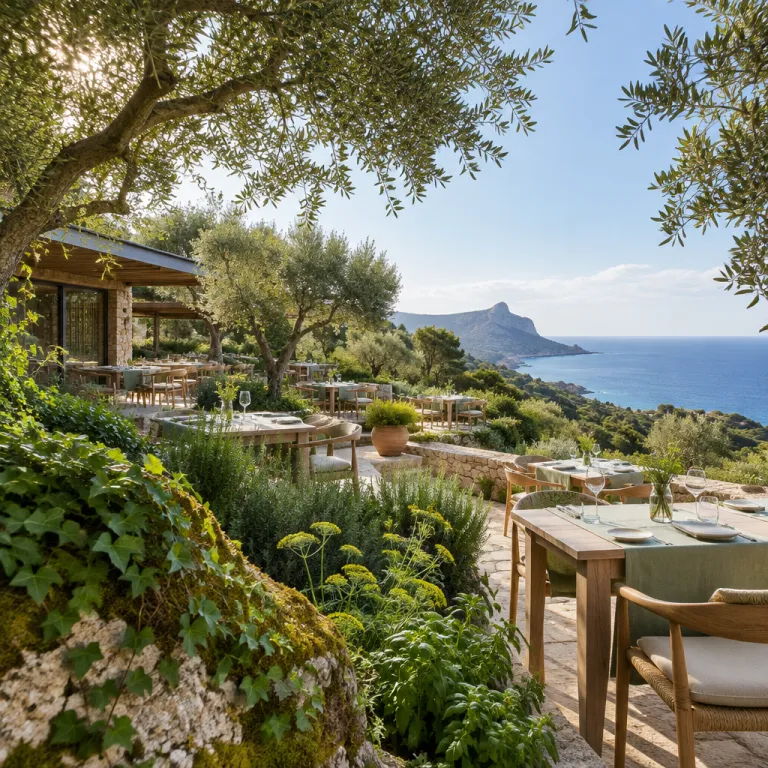
High above San Pantaleo, Il Fuoco Sacro at Petra Segreta Resort & Spa in the hills of Costa Smeralda feels more like a hillside locanda than a polished resort dining room. Yet this restaurant holds one Michelin star (Michelin Guide Italy 2024), and its terrace has become a reference point for anyone tracing Michelin restaurants in Sardinia along the northeast coast. The view sweeps toward the sea, but the plates look firmly inland, toward gardens, orchards and the shepherd’s paths.
Here the Michelin-starred team works with a contemporary Mediterranean palette, but the soul remains stubbornly Sardinian. A single star on the Michelin Guide page understates how confidently the chef handles contrasts, pairing raw seafood with smoked ricotta or crisp pane carasau with slow-braised lamb. Inspectors praise the “refined yet sincere cuisine,” and the cooking feels creative without theatrics, a quiet confidence that suits Petra Segreta more than any showy three-star circus.
Guests staying at Petra Segreta quickly learn that dinner at Il Fuoco Sacro is not an optional extra. It is the axis around which a stay turns, especially for solo travelers who want both privacy and conversation at the counter facing the open kitchen. When the restaurant is fully booked, the bar becomes a salon of sorts, where talk drifts from Cannonau vintages to which starred restaurants in Porto Cervo are worth the taxi ride.
Down on the coast, Porto Cervo still carries its superyacht reputation, but the most interesting tables are shifting. ConFusion Restaurant, often shortened to the Bassi ConFusion address by regulars, has carved out a niche as one of the best restaurants for travelers who want a Michelin-level experience with a cosmopolitan edge. As of the 2024 guide it is not starred but has been highlighted in gourmet press, and chef Italo Bassi brings a global sensibility to local seafood, folding Asian notes into Mediterranean structures without losing the clarity of the ingredients.
In this corner of Costa Smeralda, Michelin distinctions are no longer just status symbols for hotel lobbies. They are signals that a restaurant has something precise to say about Sardinia, whether through a single oyster dressed with myrtle vinegar or a reworked osteria classic served on porcelain instead of tin. For guests choosing between coastal properties, proximity to Il Fuoco Sacro, ConFusion and other acclaimed dining rooms can be as decisive as the size of the pool.
From agriturismo to white tablecloth: how tradition feeds creativity
Many of the chefs behind Michelin restaurants Sardinia celebrates today grew up far from polished dining rooms. Their first kitchens were family farmhouses, where porceddu turned slowly over embers and seadas were fried in heavy pans blackened by years of use. That agriturismo-to-fine-dining pipeline is the quiet engine of the island’s current creative surge.
In these kitchens, the line between osteria memory and contemporary ambition is deliberately blurred. A chef might plate fregola with clams in a shallow porcelain bowl, but the broth still tastes of the same seawater and tomato that once simmered in a dented pot. This is elevation without erasure, where a Michelin star rewards clarity of intent rather than distance from the original dish.
Restaurants like Abbamele near Cagliari, frequently mentioned in local food guides though not currently starred in the Michelin Guide Italy 2024, show how far this approach can go without snapping. Weekly changing menus lean on seasonal vegetables, foraged herbs and seafood that has barely left the Mediterranean before reaching the pass. The cuisine is creative, but the rhythm of the meal still echoes the long lunches of the countryside, with wine pairings that favor Vermentino and Cannonau over more famous continental Italian labels.
Across the island, chefs who once cooked anonymously in family locande now run open kitchens in luxury hotels, where guests can watch them finish plates of bottarga-dusted spaghetti or charred artichokes. The Michelin Guide has started to recognize this movement, listing starred restaurants that still feel like extensions of a farm table rather than stage sets. For travelers, this means you can taste the agriturismo spirit without giving up crisp linens or a serious cellar.
When you book a premium hotel near San Teodoro or inland from the Costa Smeralda, ask how closely the restaurant works with local farmers and producers. Properties that take this seriously often have the most compelling cuisine, even if they hold only one Michelin star or are still waiting for their first mention. In the long run, these relationships matter more than whether a dining room is open all year or closed for a long winter break.
Signature plates, seafood stories and the rise of Sardinian wine pairings
To understand why Michelin restaurants Sardinia wide feel so distinct, look closely at the plates. Traditional dishes are not being replaced; they are being rephrased, often with a single precise gesture. A culurgione might arrive standing upright, its pleats crisped over charcoal, but the filling still carries potato, mint and pecorino in familiar balance.
Seafood remains the island’s clearest calling card, and the best restaurants treat it with almost monastic restraint. At coastal addresses from Porto Cervo to San Teodoro, raw red prawns might be served with nothing more than olive oil and a shard of pane carasau, letting the Mediterranean speak in full sentences. Elsewhere, chefs riff on fregola with clams, adding bottarga or wild fennel to deepen the broth without crowding it.
Desserts follow the same logic of respectful transformation. Seadas might be smaller, the honey infused with mirto or citrus, but the essential dialogue between crisp pastry, melting cheese and fragrant sweetness remains. These are not museum pieces; they are living recipes, adjusted each year as producers refine their cheeses and honeys.
Wine programs have caught up fast, and this is where Sardinia now competes confidently with mainland Italian destinations. Vermentino from Gallura appears in vertical tastings, paired with seafood courses that show how the grape’s salinity mirrors the sea outside. Cannonau, once poured casually in osterie, now anchors serious pairings with lamb, game and aged pecorino, proving that local reds can stand beside prestigious Italy Michelin labels and international benchmarks.
For travelers booking luxury hotels, this evolution in pairing matters as much as the food. A property that invests in a cellar aligned with its cuisine, rather than chasing generic three-star Bordeaux or Barolo, will give you a more coherent experience. When you sit down in a Michelin-starred dining room and the sommelier suggests a small producer from the next valley, you are tasting the island’s confidence in its own terroir.
Planning your stay: reservations, seasons and where to sleep near the plate
Securing a table at Michelin restaurants Sardinia considers essential requires the same care as booking a coveted suite. Many starred restaurants operate with limited covers, and some are closed for stretches outside the main season. If a particular Michelin-starred address is non-negotiable for your trip, anchor your hotel booking around its calendar.
On the Costa Smeralda, properties like Petra Segreta Resort & Spa make this easy by integrating Il Fuoco Sacro into the core guest experience. Staying on site means you can choose a later seating, linger over wine and walk back to your room under the stars. In Porto Cervo, where ConFusion Restaurant draws a global crowd, consider hotels within a short taxi ride so you are not negotiating long transfers after a tasting menu.
For peak summer months (July and August), aim to reserve Michelin-starred restaurants at least four to six weeks ahead, especially in hotspots like Porto Cervo and San Teodoro. Outside high season, a few days to a week is often enough, but small dining rooms with limited covers can still fill quickly. Use the official Michelin Guide listings or the hotel’s concierge to confirm current opening days, contact details and reservation channels before you finalize flights.
Families and solo travelers who want both serious cuisine and relaxed daytime options should look at curated guides such as the stay in Sardinia overview of the island’s finest luxury hotels with kids clubs. These resources highlight properties where a Michelin-level dining room coexists with pools, beaches and activities that keep non food-obsessed companions happy. It is the difference between planning your days around a single dinner and letting great restaurants thread naturally through a broader stay.
Dress codes at Sardinian fine dining rooms are generally elegant but not stiff. Smart casual works in most Michelin Guide addresses, with jackets welcome but rarely mandatory, and beachwear firmly out of place once the sun sets. The atmosphere leans toward relaxed refinement, more Mediterranean villa than formal palace.
When you weigh options, remember that the best restaurants are not always inside the largest hotels. Some of the most compelling cuisine happens in stand-alone dining rooms or in smaller locande that partner with nearby luxury properties. Ask your concierge which starred restaurants they genuinely recommend, and which they book only because everyone asks for them.
FAQ
What is Sardinia's new fine dining wave ?
What is Sardinia's new fine-dining wave? A movement highlighting innovative Michelin-starred restaurants in Sardinia. This wave brings together chefs who elevate traditional dishes like culurgiones, fregola and porceddu into contemporary menus without losing their rustic identity, a trend reflected in recent Michelin Guide Italy editions.
Which restaurants are leading this trend ?
Which restaurants are leading this trend? Il Fuoco Sacro at Petra Segreta (one Michelin star in the 2024 guide) is a clear reference point, while Capogiro and CouCou Sardinia are frequently cited in local gourmet circles even if they are not all starred. Around these addresses, you will also find other Michelin-listed restaurants and ambitious kitchens that share the same philosophy of blending tradition with innovation.
How far in advance should I reserve Michelin starred restaurants in Sardinia ?
For peak summer months, aim to reserve Michelin-starred restaurants at least four to six weeks ahead, especially in hotspots like Porto Cervo and San Teodoro. Outside high season, a few days to a week is often enough, but small dining rooms with limited covers can still fill quickly. If a specific restaurant is central to your trip, use the contact details on the Michelin Guide or hotel website to book it before finalizing your hotel.
Are Sardinian fine dining restaurants suitable for solo travelers ?
Many of the best restaurants on the island welcome solo diners, particularly those attached to luxury hotels where bar counters and terrace tables feel natural for one. Chefs and sommeliers are often happy to tailor tasting menus and pairings, making it easy to explore the cuisine at your own pace. When booking, mention that you are traveling alone so the team can suggest the most comfortable seating.
Do Sardinian Michelin restaurants cater to dietary restrictions ?
Most Michelin restaurants Sardinia wide can accommodate common dietary needs, including vegetarian, pescatarian and gluten-free preferences. Because menus lean heavily on fresh seafood, vegetables and grains, chefs usually have room to adapt without compromising the experience. Always inform the restaurant at the time of booking so the kitchen can plan thoughtful alternatives rather than last-minute substitutions.